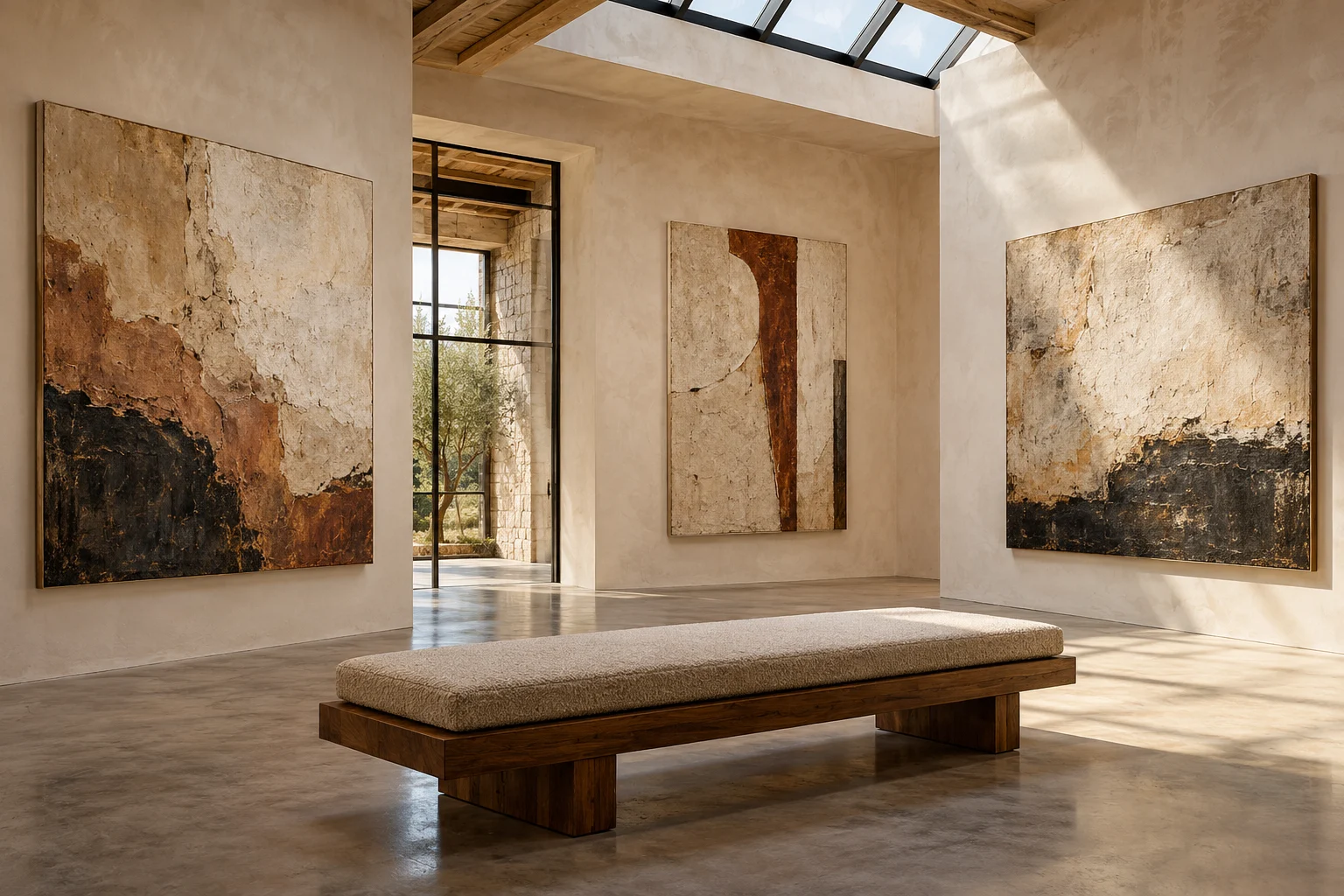
A heavy stroke of crimson across a canvas might feel like a sudden burst of energy, or it might feel like a jagged wound. A sculpture composed of weathered steel could suggest the strength of an industrial era, or it might simply look like something left behind by a retreating tide. These initial, visceral reactions are the raw materials of your experience. They exist entirely within your own perspective, independent of any guidebook or curator's note.
The Gap Between Sight and Statement
As you move through a gallery, you will inevitably encounter the written explanations mounted on the walls. These descriptions provide the creator’s stated intent, offering context about their technique, their inspirations, or the specific era in which the work was produced. There is a subtle tension between these two modes of engagement: your personal, unmediated response and the formal, documented history of the piece.
One mode is sensory and emotional; the other is intellectual and structured. The value of an art outing often lies in the friction between them. You might find that a piece you initially found calming is described as a study in chaos. Rather than feeling as though you have "missed" the point, consider that your observation is a valid data point in the life of the work.
Navigating the Confirmed Details
For some, a visit to a museum is a quest for accuracy. You may arrive with a list of specific works you intend to see, having checked the museum's website to ensure certain pieces are currently on view. This is a practical way to manage your time, especially when you have a limited window to explore a large collection. However, a meaningful tradeoff exists between the efficiency of a pre-planned itinerary and the serendipity of wandering.
For example, if you have spent your morning following a strict schedule to see five specific installations, you may find yourself rushing past a small, quiet sketch in a side corridor that happens to resonate deeply with your current mood. The structured plan ensures you see the "confirmed" highlights, but it can also act as a barrier to the unexpected discoveries that make a cultural outing memorable.
Balancing Intent and Impression
To make the most of your time, you might decide to split your visit into two distinct phases. You could begin by following a confirmed list of must-see works to satisfy your initial objectives. Once those are checked off, you can transition into a period of unstructured wandering, where the goal is not to learn facts, but to observe textures, light, and scale.
If you find yourself stuck on a particular piece, ask yourself what specific visual element triggered your reaction. Was it the way the light hit a certain surface, or the scale of the object in relation to your own body? By focusing on these concrete observations, you can build a personal dialogue with the art that remains entirely your own, regardless of what the plaque on the wall says.