This is a paid partner contribution. Commercial relationships are disclosed so readers can distinguish sponsored content from editorial guides.
A sudden Texas storm can leave a vehicle looking very different in a matter of minutes. When the clouds clear and you walk out to the driveway, the immediate impulse might be to scan the hood and roof for every new indentation. Before you begin making calls or scheduling inspections, the most useful action is to organize your observations and prepare for the conversations that follow.
Gathering Your Observations
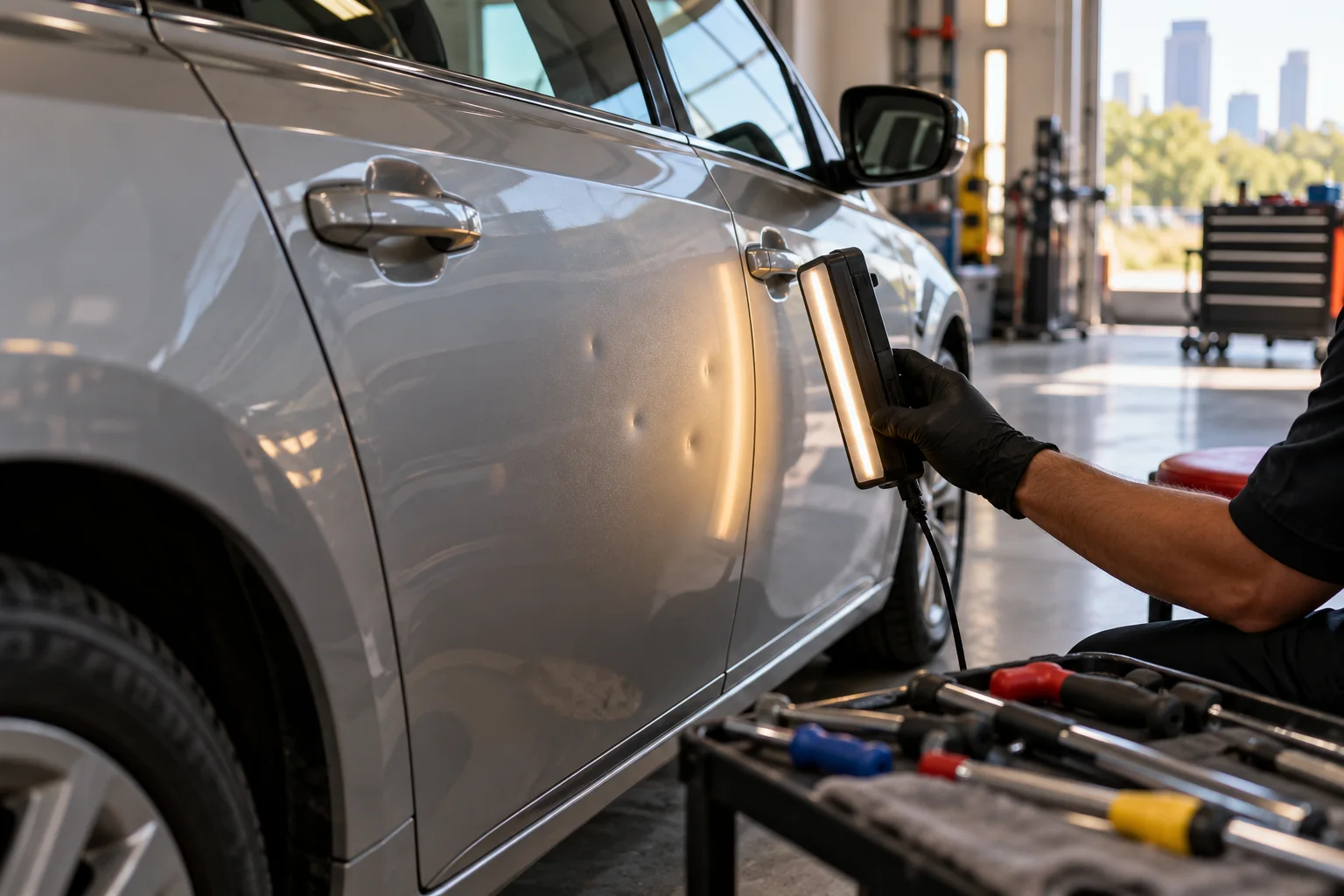
The way you describe the situation to a professional can change the nature of the initial consultation. Rather than relying on general descriptions, take a moment to walk around the vehicle and note specific areas of concern. Look for whether the marks are concentrated on flat surfaces like the hood or if they appear on curved panels. Note if the damage seems consistent with a single event or if there are varying depths to the marks.
For example, if you find several small, shallow marks on the trunk lid but a larger, deeper indentation on the roof, having that distinction ready will help the person you speak with understand the scope of the work. This level of detail allows for a more precise discussion regarding the next steps for your specific vehicle.
Navigating the Assessment Process
When you reach out to a service provider, the goal is to move from a vague idea of damage to a clear understanding of the assessment. You might be weighing the choice between a quick visual estimate and a more thorough, hands-on inspection. A quick estimate provides immediate information, while a physical inspection might offer a more complete picture of what lies beneath the surface of the metal.
Ask the professional how they approach the evaluation of different panel types. You may also want to ask how they document their findings for your records. If you are looking for specific regional assistance, such as dent repair mckinney tx, ensure you ask what information they require from you to provide an accurate initial response.
Preparing for Complex Scenarios
Sometimes, the extent of the damage leads to more complicated discussions regarding the vehicle's value and its future. This is a moment where having a clear record of your vehicle's condition prior to the storm can be helpful. If the damage appears extensive, you may find yourself researching when hail damage totals a car in Texas to understand the different paths available to you.
In these instances, ask the professional how they distinguish between repairable marks and damage that affects the structural integrity of a panel. Ask what documentation they provide that you can use when speaking with other parties. Having a clear, documented account of the damage and the professional's initial assessment ensures you are not making decisions based on incomplete information.
Defining Your Next Steps
The transition from noticing damage to addressing it involves a trade-off between immediate action and careful deliberation. Moving too quickly might mean overlooking subtle details, while waiting too long can leave the uncertainty of the damage hanging over your daily routine. Focus your energy on collecting the facts: the location of the marks, the timing of the event, and the specific questions you need answered by a technician. Once you have these details organized, you will be ready to engage in a productive conversation about your vehicle's path forward.